
Preassure gauge - Technical
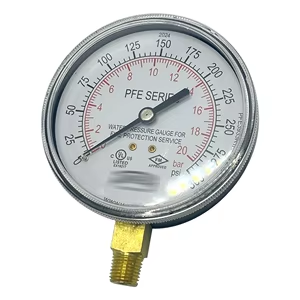
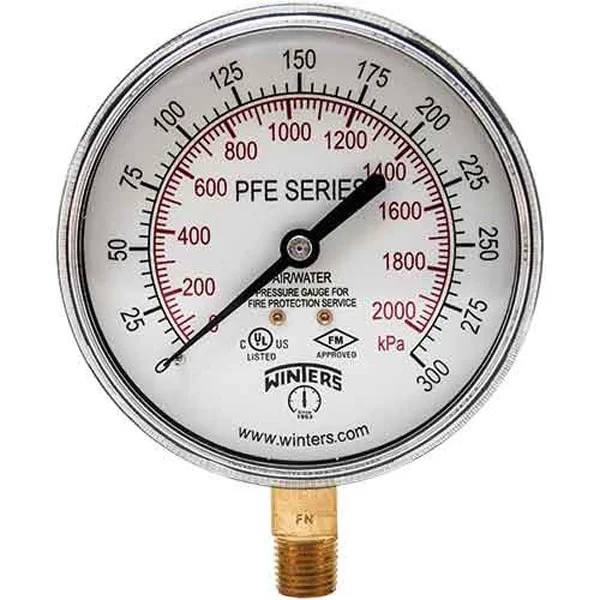
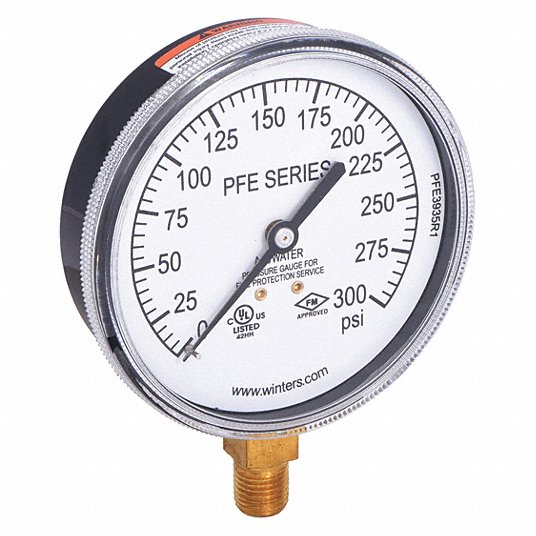
🔹 Pressure Gauge – Professional Overview
Definition: A Pressure Gauge is a mechanical instrument used to measure and display the pressure of fluids (liquids or gases) within a system. It is essential for monitoring and maintaining safe operating conditions in fire protection, industrial, and HVAC applications.
Application Areas
Fire sprinkler systems (to monitor water supply pressure)
Industrial piping and process systems
HVAC installations (air and water pressure monitoring)
Pump stations and water distribution networks
Measurement & Display
Indicates system pressure in PSI, bar, or kPa depending on scale.
Available in dry or liquid-filled versions (liquid-filled gauges reduce vibration and extend life).
Dial sizes typically range from 50 mm to 100 mm for clear visibility.
Advantages
Provides accurate real-time pressure monitoring.
Enhances system safety by preventing overpressure conditions.
Compact design with easy-to-read dial.
Compatible with multiple connection types (NPT, BSP, etc.).
Appearance
Circular dial with pointer indicator.
Stainless steel or brass case for durability.
Clear glass or polycarbonate lens.
Rear or bottom connection options depending on installation.
📊 Technical Specifications
| Feature | Specification |
|---|---|
| Pressure range | 0–300 PSI (other ranges available) |
| Accuracy | ±1.6% of full scale |
| Case material | Stainless steel or brass |
| Dial size | 50 mm, 63 mm, 100 mm |
| Connection | ¼” or ½” NPT/BSP |
| Filling | Dry or glycerin-filled |
| Lens | Glass or polycarbonate |
| Standards | EN 837-1, ASME B40.100 |